
Starting a Windowsill Herb Garden for Small Kitchens
Sep 21,2018 - Sports

Let’s be honest: most people who fire up an online slot or place a football bet do it for the thrill. And that’s fine—entertainment is the point. But if you’re reading this, you’re probably curious about the difference between a casual player and someone who actually walks away with more than they put in. The secret isn’t a magic system or a hidden algorithm. It’s understanding the math, the psychology, and the specific quirks of each vertical. iGaming isn’t one big blob—slots, sports betting, and poker are completely different beasts. Treat them the same and you’ll bleed money. Treat them with respect and you might just tilt the odds a little closer to your side.
Every slot machine, whether it’s a classic three-reeler or a 6x5 megaways monster, runs on a Random Number Generator. There’s no hot or cold streak—just probability. The key number is the Return to Player (RTP) percentage. A slot with 96% RTP pays back €96 for every €100 wagered over millions of spins. That 4% is the house edge. But here’s what most players miss: RTP is a long-term average. In a single session, volatility matters more.
High-volatility slots (like Book of Dead or Bonanza) pay rarely but can hit huge. Low-volatility slots (like Starburst) pay small amounts frequently. Which is better? Depends on your bankroll. If you have 50 spins’ worth of cash, low volatility keeps you in the game. If you have 500 spins and want a shot at a jackpot, high volatility is your friend. Always check the paytable and the max win. A slot advertising a 50,000x max win might only hit that once every 10 million spins—it’s lottery-ticket territory. You can read more about it on สล็อต.
If slots are pure chance, sports betting is where skill actually enters the room. Not because you can predict the future, but because you can exploit market inefficiencies. The first rule: never accept the first odds you see. Different bookmakers offer different prices on the same event. A decimal 2.10 on one site and 2.25 on another is a 7% difference in return. Over 100 bets, that’s your entire profit margin.
Next, understand the vigorish (vig)—the commission baked into the odds. Standard -110 (American) means you bet €110 to win €100. The bookmaker’s edge is about 4.5%. But if you can find -105 or even +100 on the same line, you’ve cut that edge in half. Professional bettors live on these tiny edges.
Another concrete tactic: middling. Suppose you bet Team A -3.5 at 1.90 and later Team A -2.5 at 2.10. If the final margin is exactly 3 points, you win both bets. This doesn’t happen often, but when it does, it’s pure profit. Even if you only break even on other outcomes, you’ve created a risk-free shot.
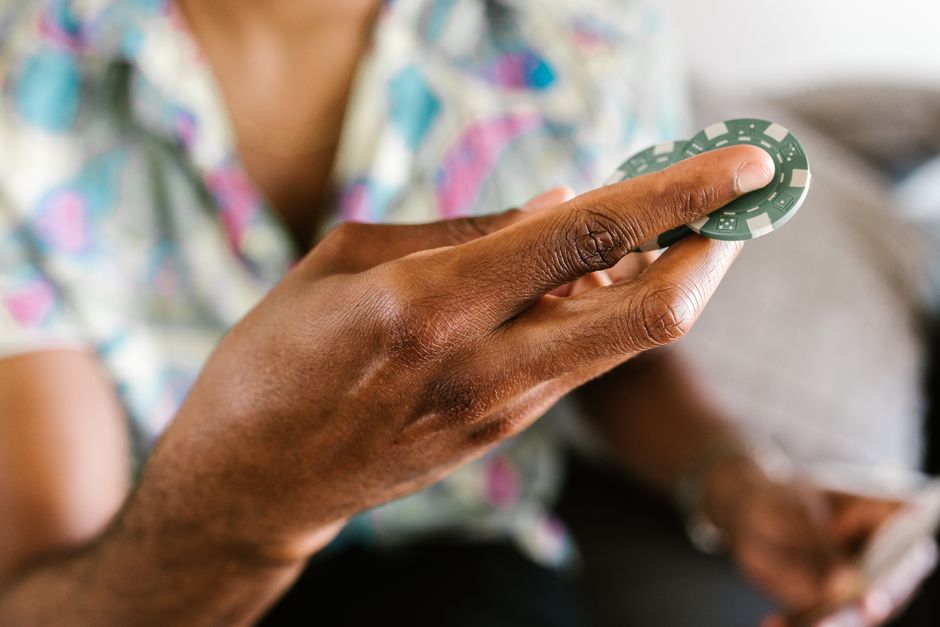
Poker is the only iGaming vertical where a skilled player can consistently beat the game. The house doesn’t play against you—it takes a rake. Your opponents are the fish, the regs, and the occasional maniac. The single biggest mistake beginners make is playing too many hands. In Texas Hold’em, you should voluntarily put money in the pot (VPIP) less than 25% of the time in full-ring games. Tight is right.
Position is everything. Acting last gives you information. On the button, you can profitably play hands like 7-8 suited or even 2-3 suited because you’ll have position on every post-flop street. Under the gun, you should only open with premium hands like A-A, K-K, Q-Q, A-K. That’s it.
Bankroll management is non-negotiable. For cash games, you need at least 20 buy-ins for the stake you’re playing. At €0.50/€1, that’s €2,000. For tournaments, 50-100 buy-ins. If you don’t have that, drop down a level. The worst thing you can do is play scared money—you’ll make mistakes.
Whether you’re spinning slots, betting on the NBA, or grinding micro-stakes poker, three traits matter more than any secret strategy. First, emotional discipline. Tilt is the enemy. After a bad beat, walk away for 15 minutes. Second, record keeping. You cannot improve what you don’t measure. Use a simple note on your phone: date, game, stake, result, mood. Third, bonus awareness. Casinos offer free spins, deposit matches, and cashback. These are real value—but read the terms. A 40x wagering requirement on a €100 bonus means you must bet €4,000 before withdrawing. That’s not free money; that’s a trap for the undisciplined.
A concrete example: A €100 bonus with 30x wagering on slots (96% RTP) has an expected loss of €100 * 30 * 0.04 = €120. You’d lose more than the bonus is worth. But if the wagering is only 10x and the game is blackjack (99.5% RTP), expected loss is €100 * 10 * 0.005 = €5. That’s a +EV bonus. Do the math.
Live dealer games—blackjack, roulette, baccarat—stream a real human dealing real cards. The house edge is identical to the physical casino (0.5% on blackjack with perfect strategy, 2.7% on European roulette). The advantage is speed and convenience. But beware: live blackjack often uses 8 decks and pays 6:5 on blackjack instead of 3:2. That single rule increases the house edge from 0.5% to 1.5%. Always check the rules.
Crash games (like Aviator or Bustabit) are a newer breed. You bet, a multiplier rises, and you must cash out before it crashes. There’s no skill—just a provably fair RNG. The house edge is typically 1-3%. Some players use a martingale strategy (double after a loss), but that fails spectacularly because the crash can hit zero. My advice: set a target multiplier (like 1.5x) and cash out immediately. Greed kills.
At the end of the day, iGaming is a business. The casino, the sportsbook, and the poker room all have a built-in edge. Your job isn’t to beat them every time—that’s impossible. Your job is to manage your bankroll, exploit bonuses intelligently, and know when to walk away. The players who last aren’t the ones who hit a 10,000x slot win. They’re the ones who still have money next month. Treat every bet as a transaction, not a lottery ticket. And never chase losses. The math will always win in the long run—unless you’re the one setting the terms.
Copyright © 2026 Tending Spring. All rights reserved.Tending Spring. All Right Reserved.
 Sophie Bramble

John Doe - 20 November 2026
Tending Spring Written for people who value the details, and want honest guidance they can trust.
John Doe - 29 july 2018
Tending Spring Simple, genuine and looked after with care — the kind of place worth returning to.
John Doe - 29 july 2018
Tending Spring Simple, genuine and looked after with care — the kind of place worth returning to.
John Doe - 29 july 2018
Tending Spring We spend our time finding what works so you don't have to, and sharing exactly what made the difference.